
7 Costly Heat Pump Installation Mistakes in Auckland & How to Avoid Them | Expert Guide
7 Costly Mistakes to Avoid with Your Heat Pump Installation in Auckland
Key Takeaways
- Choosing the wrong size heat pump is a primary cause of inefficiency, leading to higher energy bills and premature wear on the unit.
- The placement of both the indoor and outdoor units is critical for performance, airflow, and the system's overall lifespan.
- Hiring an unqualified installer is a major safety and financial risk that can void your warranty and lead to expensive repairs.
- Regular professional servicing is not optional; it's essential for maintaining efficiency, preventing breakdowns, and extending the life of your investment.
A high-quality heat pump is one of the best investments you can make for your Auckland home or business. It provides year-round comfort, efficiently heating in winter and cooling in summer. But that investment is only as good as its installation. A poor setup can turn a top-of-the-line unit into an expensive, inefficient headache.
In our 15 years of installing and servicing heat pumps across Auckland, we’ve seen it all. We've been called in to fix the consequences of rushed jobs, poor planning, and unqualified work. These mistakes are not just inconvenient; they're costly. But they are also completely avoidable.
Here are the seven most common mistakes we see, and how you can ensure your heat pump installation in Auckland is done right the first time.
1. Choosing the Wrong Size Unit
This is easily the most frequent issue we encounter. It seems logical to think "bigger is better," but with heat pumps, "just right" is what you need. An undersized unit will run constantly, struggling to reach the desired temperature. This puts immense strain on the components, leading to premature failure and sky-high power bills.
Conversely, an oversized unit is just as bad. It will "short cycle"—blasting hot or cold air quickly, reaching the temperature, and then shutting off. This constant starting and stopping is incredibly inefficient, causes unnecessary wear and tear, and fails to properly dehumidify the air in summer.
Getting the size right involves assessing room dimensions, window size and type, insulation levels, and even the amount of sun a room gets. It’s a crucial calculation. To get a better idea of what your space needs, you can use our heat pump calculator as a starting point.
2. Getting the Placement Wrong
Where the indoor and outdoor units are placed has a massive impact on performance. It's not about finding the most hidden spot; it's about finding the most effective one.
The Outdoor Unit
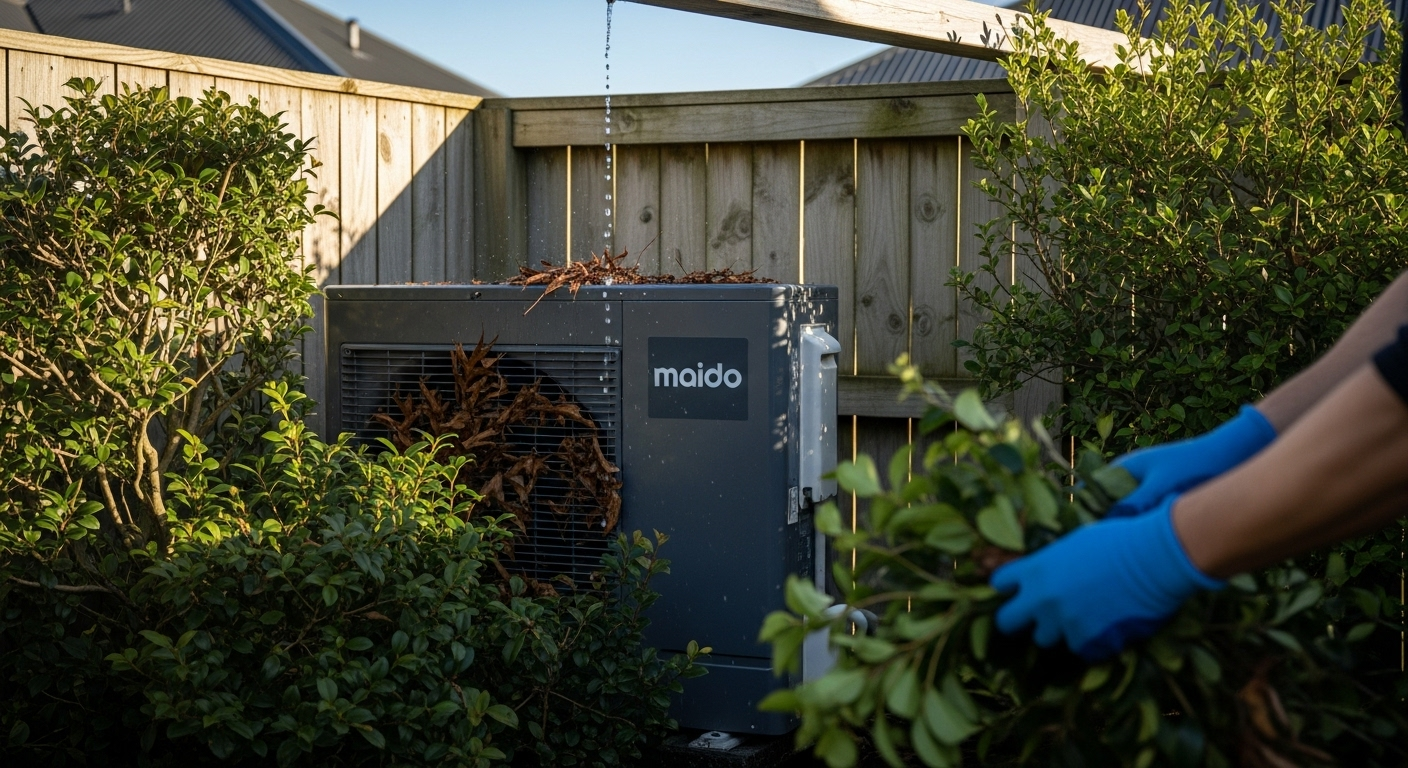
The outdoor unit needs to breathe. We've seen them jammed into tight spaces, pushed up against fences, or installed under constant drips. This starves the unit of air, forcing it to work harder and reducing its efficiency. According to the official EECA installation guide, there should be a minimum clearance of 500 mm for air inlet/outlet faces and 600 mm above the unit.
It also needs to be on a stable, level surface, away from bedrooms where the noise could be a bother, and protected from environmental hazards.
The Indoor Unit
Inside, the goal is optimal air distribution. The unit should be placed high on a wall where it can circulate air freely throughout the entire space, not just one corner. A common mistake we've observed is installing units in kitchens or directly above sources of heat like a television. Kitchen grease can clog the filters and coils, while heat from other appliances can confuse the unit's thermostat.
3. Overlooking Insulation and Draughts
Installing a powerful heat pump in a poorly insulated, draughty house is like trying to fill a bucket with a hole in it. The heat pump will do its job and produce warm air, but that air will escape straight through the walls, ceiling, and gaps around windows and doors.
Your system will have to run constantly just to keep up, completely negating its energy efficiency. For ducted systems, this is even more critical. Research shows that leaky ducts can lose up to 30% of the conditioned air before it even reaches the room. Before you invest in a heat pump, it's worth assessing your home's insulation. It's the foundation of an efficient home.
4. Hiring an Unqualified or Unlicensed Installer
This is the most dangerous mistake of all. A heat pump isn't just a simple appliance; it's a complex system involving high-pressure refrigerants and high-voltage electricity. Hiring a "cowboy" or a general handyperson to save a few dollars is a huge risk.
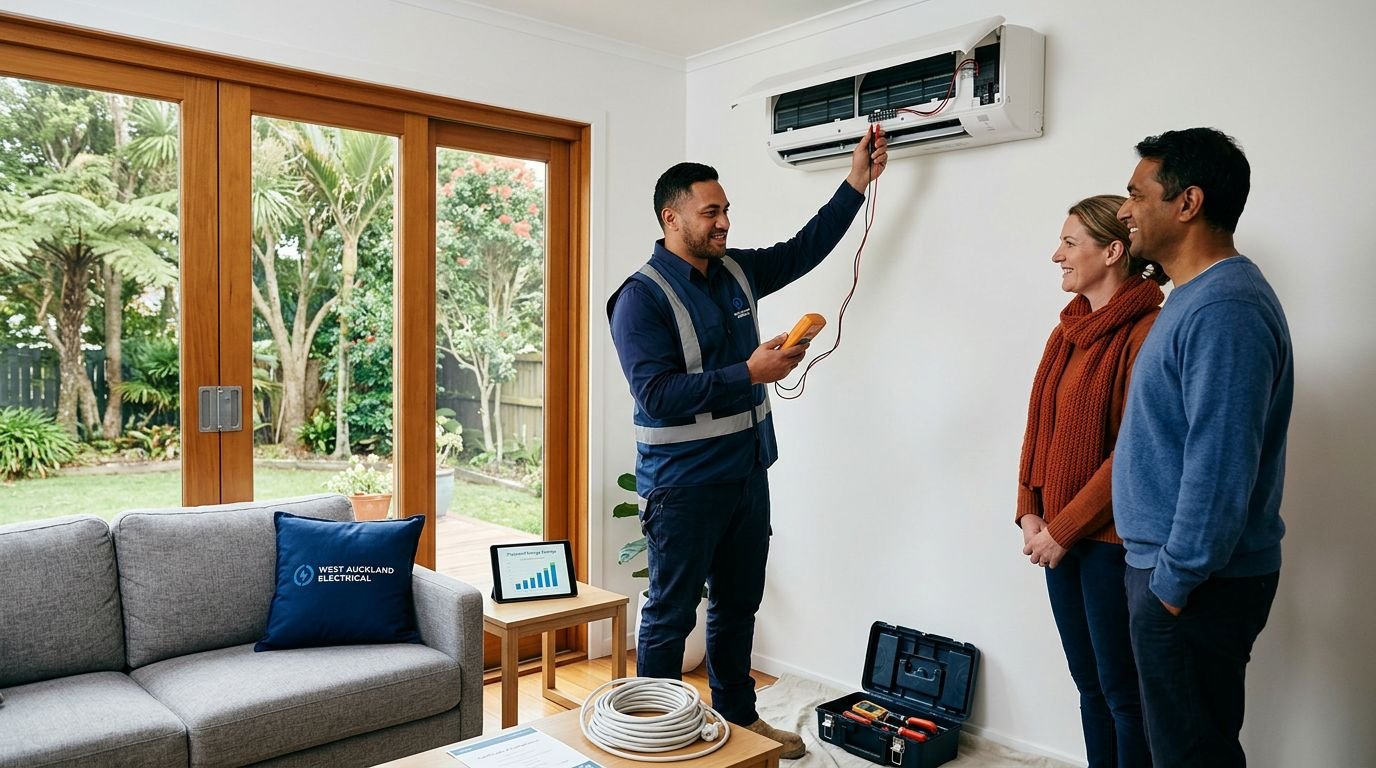
We've seen faulty wiring that poses a serious fire hazard, refrigerant lines that leak (which is bad for the environment and your system), and improper commissioning that kills efficiency from day one. In New Zealand, all electrical work for a heat pump must be done by a registered electrician , and they must issue an Electrical Certificate of Compliance (CoC). No exceptions.
A professional installer also has specialised equipment, like a vacuum pump to evacuate all air and moisture from the pipework before charging the system with refrigerant. Skipping this step guarantees premature failure. Your warranty will almost certainly be voided if the unit isn't installed by a certified professional. You can learn more about what a professional process looks like in our complete Auckland heat pump installation guide.
5. Chasing the Lowest Price
Everyone loves a good deal. But when it comes to heat pump installation, the cheapest quote is often the most expensive one in the long run. A low price can be a red flag for a low-quality unit, a rushed job, or an unqualified installer.
The consequences show up in your monthly power bills. A poorly installed heat pump can be up to 30% less efficient than one that's set up correctly. Add in the cost of future repairs and the potential for needing a full replacement years earlier than you should, and that initial "saving" disappears fast.
Treating your heat pump as a long-term investment in your property's value and comfort is the key to unlocking its benefits.
6. Neglecting to Learn How to Use It
Modern heat pumps are smart, but they aren't mind readers. Many people leave their unit on the 'Auto' setting, assuming it's the most efficient. It isn't.
In 'Auto' mode, the unit will switch between heating and cooling to maintain a specific temperature. On a mild Auckland day, this can mean it heats the room in the morning and then wastes energy cooling it down in the afternoon. It's far more effective to use the specific modes. Set it to 'Heat' (the sun symbol) in winter and 'Cool' (the snowflake symbol) in summer.
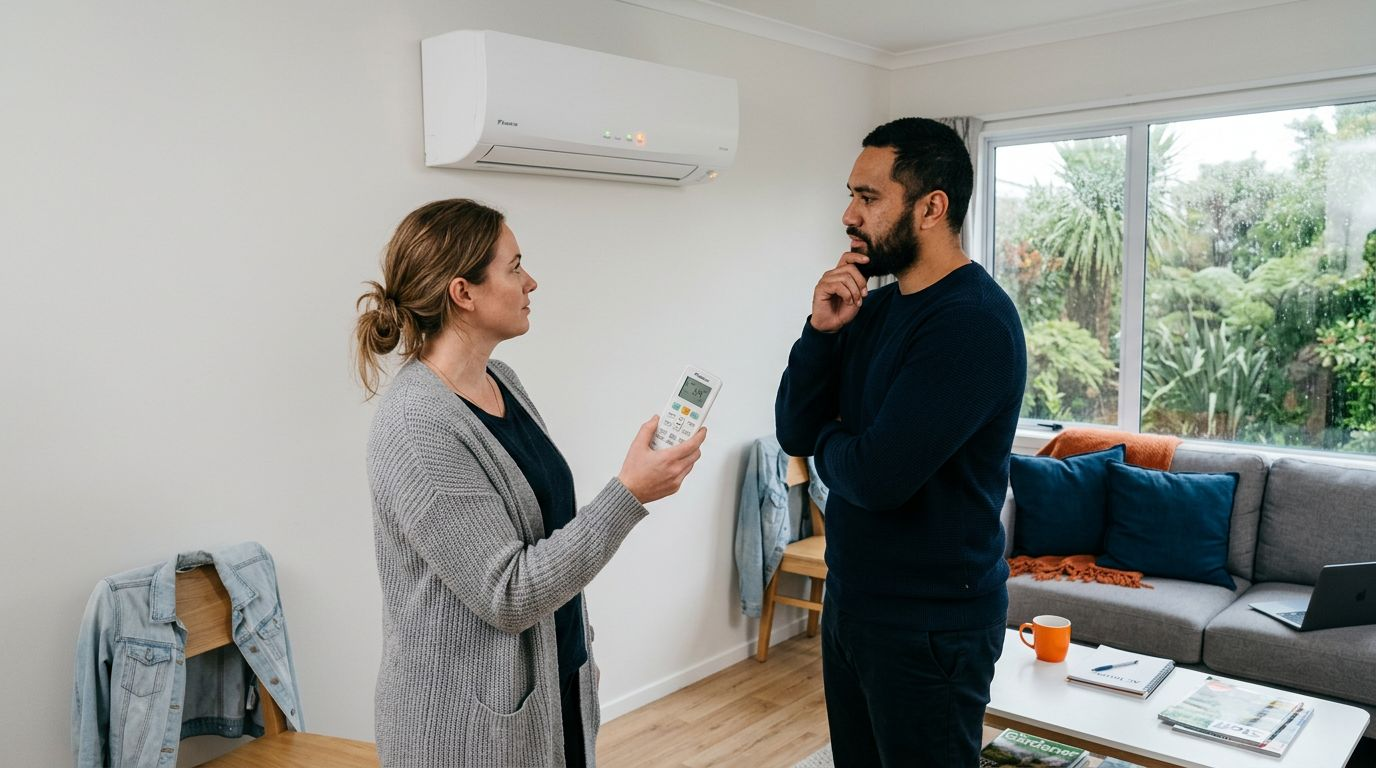
Any good installer will take the time to walk you through the remote control and explain the different modes and fan settings. We make this a standard part of every installation because an educated user gets the best performance and savings from their system.
7. Skipping Professional Servicing
A heat pump is like a car. It needs regular tune-ups to run smoothly and efficiently. Skipping your annual service is a recipe for trouble.
Over time, dust and grime build up on the filters, coils, and fans of both the indoor and outdoor units. This build-up restricts airflow, forcing the system to work harder and consume more power. It can also lead to unpleasant odours and a reduction in air quality.
Regular maintenance ensures your unit is clean, checks for any potential issues like refrigerant leaks, and keeps it running at peak efficiency. In our experience, a properly maintained unit lasts longer and costs less to run. In fact, a clean, well-serviced unit can prevent a 10-35% increase in power consumption , saving you significant money over the year. Don't wait for a problem to arise; book a professional heat pump service annually.
Get Your Auckland Heat Pump Installation Right the First Time
A heat pump is a fantastic addition to any home, but its value is unlocked through expert installation. By avoiding these common mistakes, you ensure your system delivers the comfort, efficiency, and reliability you paid for.
At Auckland Heatpump Services, our team of registered electricians are specialists in every aspect of heat pump installation. We handle the entire process, from helping you choose the perfect unit to providing a flawless installation and showing you how to get the most out of it. If you’re looking for a trusted team for your heat pump installation in Auckland , we’re here to help.