Auckland's 2026 Heat Pump Revolution: Slash Bills & Maximize Home Comfort!
Heat Pumps 2026: The Smart, Energy-Efficient Choice for Auckland Homes
Key Takeaways
- Modern heat pumps deliver 300% to 500% efficiency by moving existing heat rather than creating it from scratch.
- Running a 6kW unit in Auckland typically costs between 40 and 60 cents per hour, significantly cheaper than gas or plug-in electric heaters.
- Professional sizing and installation are essential to ensure your system operates at peak efficiency without wasting power.
- New Zealand’s 80% to 85% renewable electricity grid makes heat pumps a low-carbon solution for environmentally conscious homeowners.
- Smart technology and R32 refrigerants are the new standards for 2026, offering better control and lower environmental impact.
Choosing how to heat and cool your home is one of the most important decisions you will make for your property. Whether you are a first-time homeowner in South Auckland or managing a portfolio of rentals in the North Shore, the goal is always the same: year-round comfort without a frightening power bill. At Auckland Heatpump Services, we have spent over 15 years installing more than 6,000 units, and we have seen first-hand how technology has shifted. In 2026, the heat pump stands as the undisputed heavyweight champion of home climate control.
How Modern Inverter Heat Pumps Actually Work
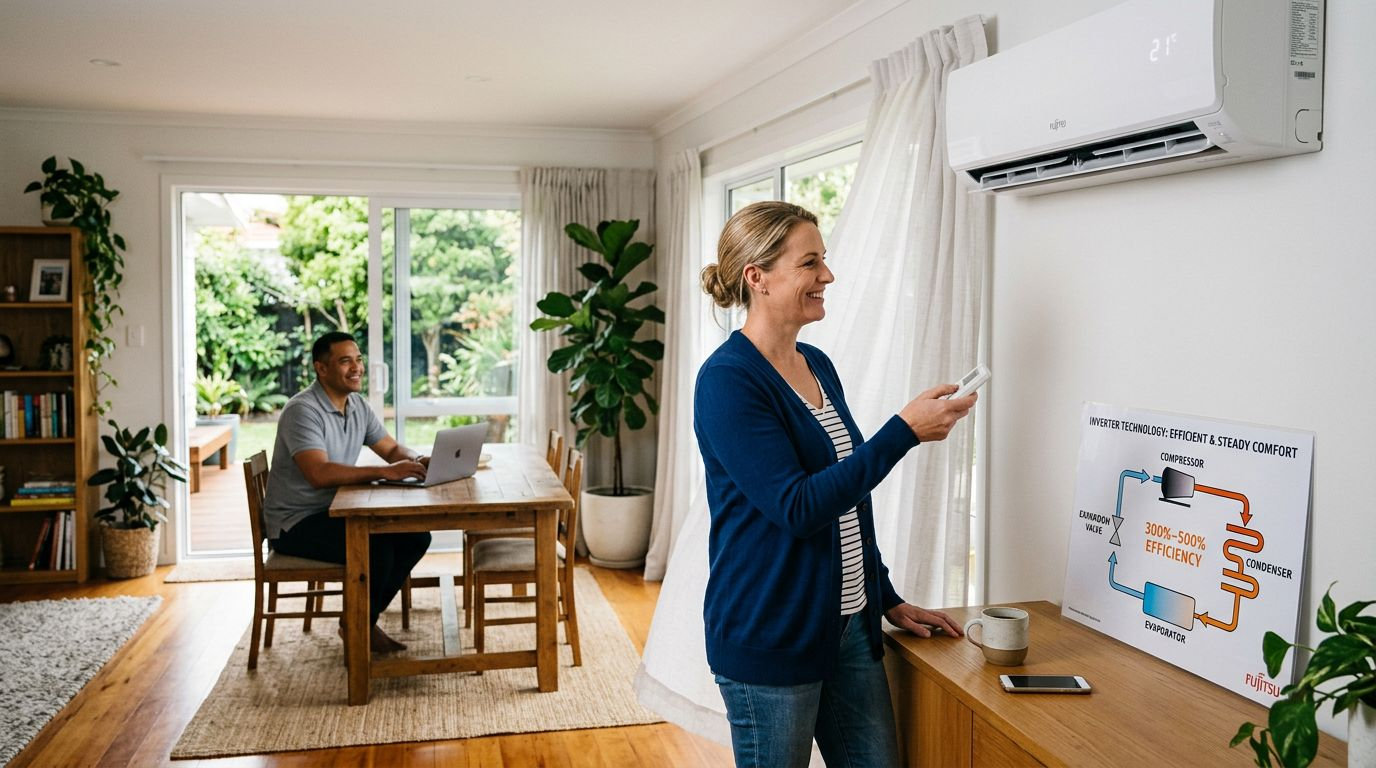
The magic of a heat pump lies in the fact that it moves heat instead of generating it. Traditional electric heaters use a lot of energy to create warmth through a glowing element. A heat pump works like a refrigerator in reverse. It uses a refrigeration cycle to extract ambient heat from the outside air and move it indoors. Even on a crisp Auckland winter morning, there is enough thermal energy in the air for the system to harvest. This process allows the system to achieve efficiencies of 300% to 500%, meaning you get three to five times more heat energy than the electricity you pay for.
Modern systems rely on inverter technology to maintain this efficiency. Older units operated like a light switch, either 100% on or completely off, which led to noisy operation and temperature swings. Inverters act more like a dimmer switch. The variable-speed compressor ramps up to reach your desired temperature and then slows down to a whisper to maintain it. This steady approach keeps your home at a consistent temperature while using the absolute minimum amount of power required.
Real-World Running Costs in Auckland
A common question we hear over a coffee is whether these units are actually cheaper than gas. The data from the Energy Efficiency and Conservation Authority (EECA) and our own local testing provides a clear answer. A typical 6kW heat pump in an Auckland home costs roughly 40 to 60 cents per hour to run. For a family using their unit during the evening, this often totals between $1.50 and $3.00 per day. When you compare this to portable electric heaters, which are roughly three to four times more expensive to run for the same amount of warmth, the savings become obvious.
Gas heating faces increasing challenges in 2026. Between rising fixed line charges and the cost of the fuel itself, gas often costs three times as much to run as a high-efficiency heat pump. Consumer NZ reports that annual fixed charges for gas connections now average over $800 per year before you even turn a heater on. Switching to an efficient electric system allows homeowners to avoid these secondary connection fees entirely. For a detailed breakdown of how these numbers apply to your specific suburb, you can read our guide on Auckland heat pump running costs.
Sizing and Installation for the Auckland Climate
Success with a heat pump depends entirely on getting the "Goldilocks" size for your specific space. An undersized unit will struggle to keep up, running at maximum capacity and wearing out its components prematurely. Conversely, an oversized unit will "short-cycle," turning on and off too frequently, which reduces comfort and wastes energy. We consider the layout of your home, the quality of your insulation, and even the local humidity levels when recommending a system.
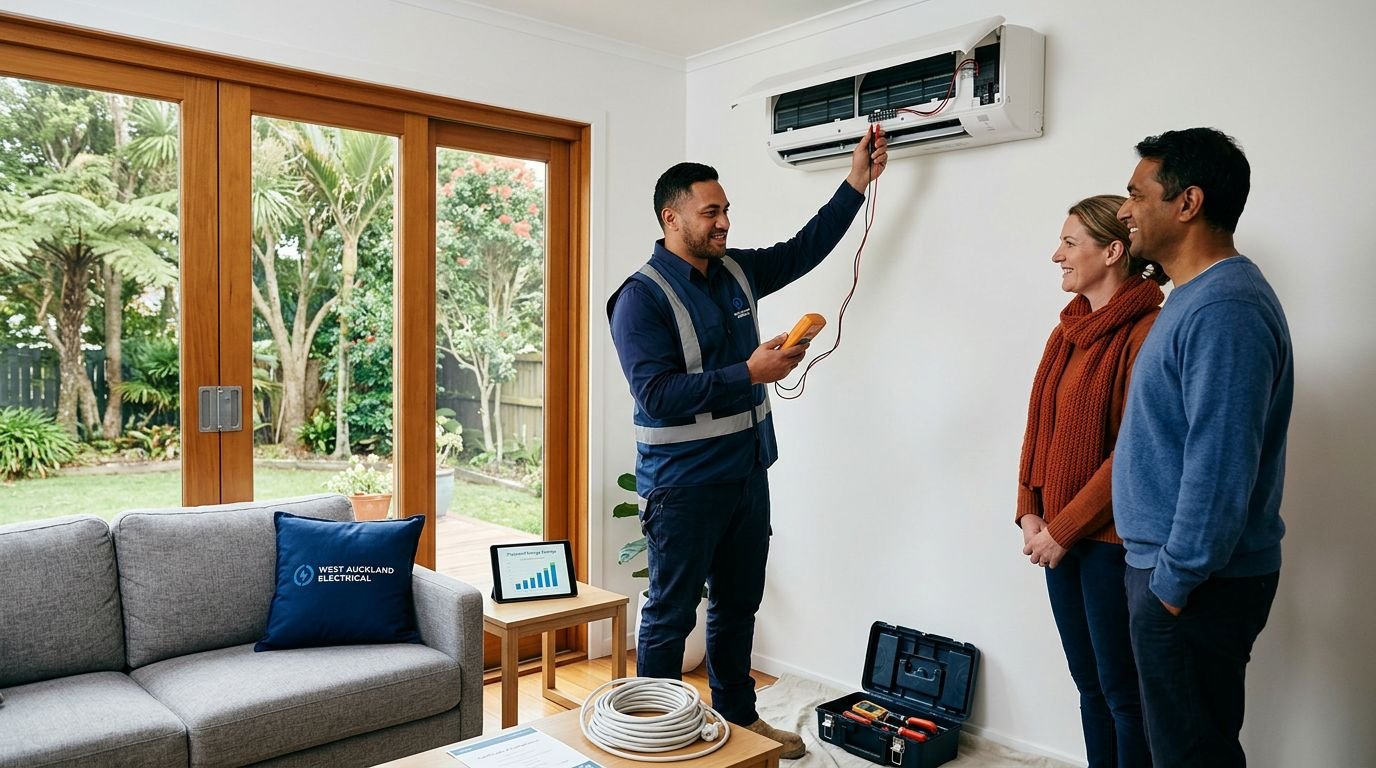
Take a homeowner in a high-ceiling villa in Grey Lynn, for example. Their needs differ vastly from someone in a modern, well-insulated apartment in Newmarket. A professional, electrician-led installation ensures that the outdoor unit is placed for maximum airflow and the indoor unit is positioned to distribute air effectively without creating draughts. You can learn more about our specific process on our heat pump installation page.
The Pros, Cons, and Maintenance Realities
The benefits of a heat pump extend beyond just warmth. They provide dehumidification, which is vital for keeping Auckland’s damp winter air out of your carpets and curtains. Because New Zealand’s electricity grid is roughly 80% to 85% renewable, using a heat pump is one of the most effective ways to lower your household carbon footprint. These systems use modern R32 refrigerants, which have a significantly lower global warming potential than older gases and enable better energy performance.
There are, however, practical realities to consider. The upfront cost of a heat pump is higher than a cheap plug-in heater. You also need to stay on top of basic maintenance. We recommend that homeowners clean their indoor filters every few months. A dirty filter forces the motor to work harder, which can increase power consumption by 10% to 35%. An annual professional service ensures the coils are clean and the refrigerant levels are correct, extending the lifespan of the unit to 15 years or more. Our team provides comprehensive advice on maintaining an eco-friendly heat pump in NZ.
Future Trends: Why 2026 is the Year of the Smart Home
The heat pump of 2026 is a far cry from the basic boxes of a decade ago. Smart-home integration is now the standard. You can use your smartphone to turn on the heating while you are leaving the office, ensuring the house is warm the moment you walk through the door. Geofencing technology can even detect when you have left the house and automatically lower the temperature to save power. These systems also provide remote fault detection, allowing technicians to identify issues before they lead to a breakdown.
We are also seeing the rise of cold-climate models that maintain high efficiency even during unusual frost events. While Auckland rarely sees extreme sub-zero temperatures, these advanced models offer peace of mind and superior performance during our dampest, coldest weeks. Choosing a modern system today means you are investing in a piece of technology designed to work with the smart grids and environmental standards of the next decade.
Investing in a heat pump is about more than just buying an appliance. It is about choosing a healthier, more affordable way to live in our unique Auckland climate. By selecting the right size, ensuring a professional installation, and keeping up with simple maintenance, you can enjoy a comfortable home for many years to come.