Decoding Your Daikin Heat Pump Error Lights: What They Really Mean
Daikin Heat Pump Service Auckland: Decoding Common Error Codes
Key Takeaways
- Error code U4 indicates a communication failure between the indoor and outdoor units.
- Codes A6 and E7 specifically signal faults within the indoor or outdoor fan motors.
- Accumulated dust and dirt can increase your heat pump power consumption by up to 35 percent.
- Professional servicing can save Auckland households up to $250 a year on energy bills.
- Annual maintenance helps avoid the most common causes of system breakdowns and error codes.
Seeing a blinking timer light on your Daikin heat pump often brings a sense of dread, especially when Auckland serves up a humid afternoon or a particularly chilly morning. Those flashing lights are your system trying to tell you something specific about its internal health. In our experience, these codes serve as helpful diagnostic tools rather than reasons to panic. We see these issues daily across Auckland, and most of the time, they are signals that your system requires a bit of professional attention to return to peak performance.
Ignoring these signals often leads to higher running costs and avoidable wear on expensive components. We have found that dust and dirt buildup can hinder efficiency, increasing power consumption by 10 to 35 percent. This extra strain makes the system work harder to provide the same level of home comfort, which eventually triggers the very error codes that leave you without heating or cooling. By staying on top of maintenance, you can keep your heat pump running smoothly and protect your investment.
When those lights start flashing, the first step is identifying the specific code using your remote controller. For homeowners across New Zealand, understanding these codes is the key to knowing when to try a simple reset and when to call in the experts. If you are currently facing a cryptic display, you can book a Daikin heat pump service in Auckland to have a technician diagnose the root cause and perform a comprehensive clean.
Understanding the Daikin U4 Error Code
The U4 fault is perhaps the most common code we encounter in Auckland homes and businesses. According to official documentation from Daikin NZ , Fault U4 is a transmission error between indoor and outdoor units. This means the two halves of your air conditioning system have lost their ability to talk to each other. Think of it like a dropped phone call where the indoor unit and the outdoor unit are no longer on the same page.
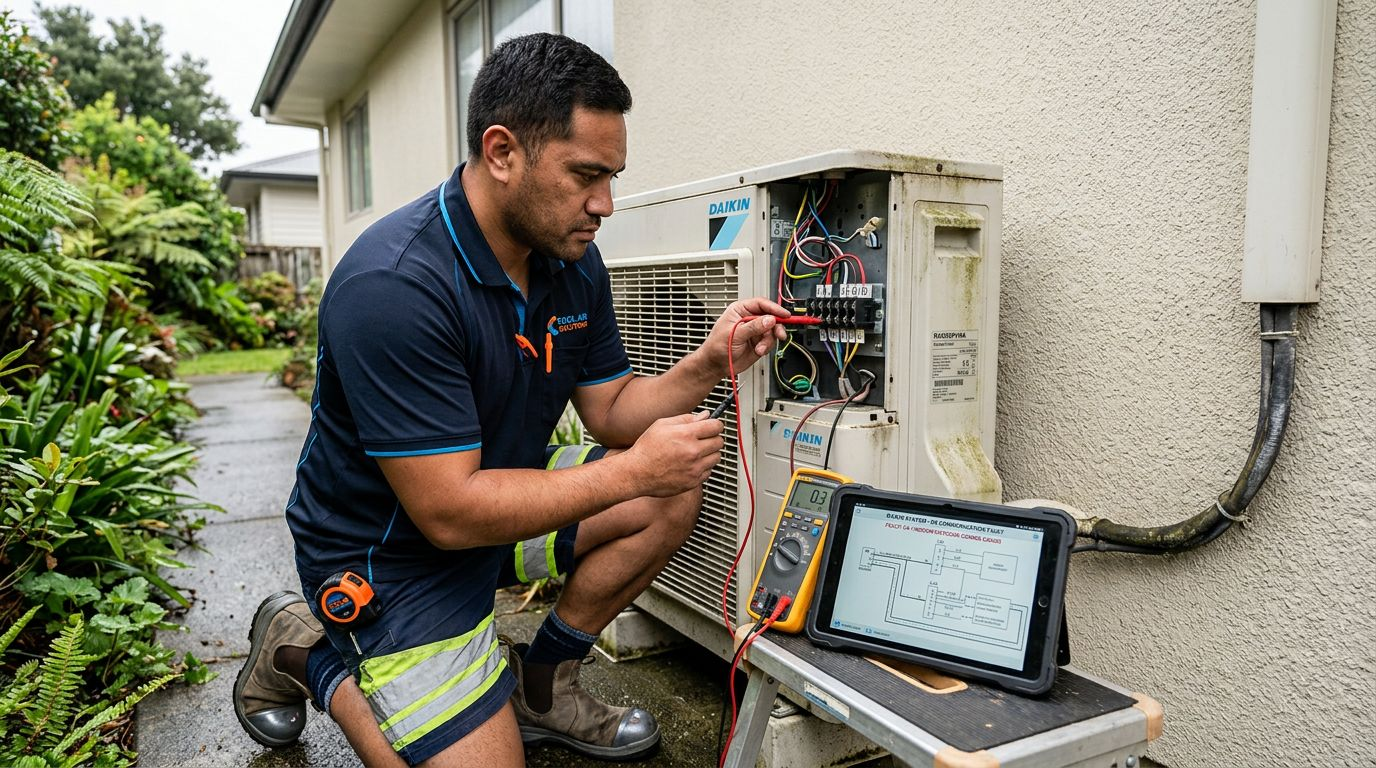
In our experience, a U4 code can sometimes be a temporary glitch caused by a power surge or a local brownout. You might find that a simple hard reset at the isolation switch clears the error. However, if the code returns, the issue usually lies in the physical wiring or the printed circuit boards (PCBs) in either unit. Because this involves high-voltage electrical components and communication signals, professional diagnostic tools are required to find the break in the chain. Consistent U4 errors often point to aged wiring or components that have been affected by Auckland's salty, coastal air.
Decoding Fan Motor Faults: A6 and E7
While the U4 code focuses on communication, the A6 and E7 codes deal with the mechanical heart of the system. These faults are directly related to the fans that move air through your home and across the outdoor coils. When these fans fail to spin at the correct speed, the system shuts down to prevent the compressor from overheating. Accurate interpretation of these codes via the remote controller is essential for a fast repair. Manufacturer data from Daikin defines A6 as a fan motor fault in the indoor unit, while E7 refers specifically to a DC fan motor fault in the outdoor unit.
An A6 code usually means the indoor fan is stuck or the motor has burnt out. We often see this happen when air filters are neglected for long periods, forcing the motor to work against massive resistance. On the other hand, the E7 code is a common sight when the outdoor unit is obstructed. A detailed guide on the Daikin E7 error code explains that this typically means a malfunction in the outdoor unit fan motor or the driver. We have seen this triggered by everything from overgrown garden debris to birds nesting inside the unit housing.
Resolving a persistent E7 or A6 fault usually requires a qualified technician to inspect the motor and the associated control board. While you can check for obvious physical obstructions like branches or leaves around your outdoor unit, internal motor failures require specialised parts and labour. For many Aucklanders, these faults serve as a reminder of why your heat pump needs an annual service to catch motor wear before it leads to a total system shutdown.
The Real Cost of Skipping Maintenance
Maintaining a Daikin heat pump in Auckland is about more than just avoiding error codes. It is a matter of financial common sense. We offer a comprehensive service for $130 + GST, with a discounted rate for each additional heat pump of $65 + GST. When you consider that an annual service and clean can save you up to $250 a year on your energy bills, the service effectively pays for itself. A clean system moves air more freely, uses less electricity, and provides better air purification for your family.
Many modern Daikin units feature advanced technology like the Enzyme Blue Deodorising Filter and Streamer Technology to improve indoor air quality. However, these features rely on a clean environment to function. When we perform a service, we look beyond the error codes to check refrigerant levels, electrical connections, and drainage. This preventative maintenance ensures your split system heat pumps or ducted air conditioners continue to provide optimal performance throughout the year. If your system has been running constantly or making strange noises, it is likely overdue for a professional check.
Why Heat Pump Efficiency Matters for New Zealand
The importance of keeping your heat pump running smoothly extends beyond your own power bills. Efficient heating and cooling solutions are central to the country's energy future. A 2025 report from the NZ Green Building Council, as reported by Scoop , found that replacing inefficient heaters with heat pumps could save New Zealand households up to $1.5 billion a year on energy bills. The report also noted that this shift could cut national gas use by nearly 40 percent of current production.
By ensuring your Daikin system is operating at peak efficiency, you are contributing to these national energy savings. Whether you have a single wall-mounted unit or a complex multi-split system, regular maintenance helps maintain the comfort and energy efficiency that Daikin heat pumps deliver. For those considering a new installation or looking to understand their options better, our guide to Auckland aircon, costs and top brands provides further insights into choosing the right heat pump system for your home.
Taking Action on Daikin Error Codes
If your Daikin heat pump is currently displaying a U4, A6, or E7 code, the best path forward is a professional diagnosis. While a quick reset might provide a temporary fix, these codes often point to underlying issues that require technical expertise. Our team specialises in Daikin systems, and we understand the specific challenges that Auckland homes face, from high humidity to salt spray. We provide expert advice and maintenance services to ensure your home remains the perfect temperature regardless of the weather outside. Addressing a fault code today prevents a more expensive repair tomorrow and keeps your energy bills under control.