Heat Pump Blowing Cold Air? Your Winter Survival Guide for a Warm Auckland Home!

The Auckland Heat Pump Services Team • March 3, 2026

Share this article

My Heat Pump is Blowing Cold Air in Winter: A Troubleshooting Guide

Key Takeaways

  • Verify your remote is set to the Sun icon (Heat mode) rather than Auto or Cool.
  • Clean your indoor filters monthly to prevent airflow blockages and high power bills.
  • Recognise that a 10 to 15 minute defrost cycle is a normal part of winter operation.
  • Set your temperature between 18°C and 22°C for the best balance of comfort and cost.
  • Contact a professional if you see error codes, ice encasing the unit, or smell burning.

Waking up to a chilly house in the middle of a damp Auckland winter is frustrating, especially when your heat pump seems to be blowing cold air instead of warmth. Before you assume the unit is broken and requires a full replacement, we recommend running through a few simple checks. Many "cold air" complaints stem from settings or basic maintenance rather than mechanical failure.

We see this often in homes from Ponsonby to Papakura. Data suggests that incorrect thermostat settings account for about 20% of service calls regarding cold air. By following this guide, you might save yourself the cost of a call-out fee and get your home back to a comfortable temperature immediately.

The "Feels Cold" Factor: Managing Expectations

Heat pumps operate differently than gas furnaces or electric bar heaters. While a gas heater might blast air at 60°C, a properly functioning heat pump typically supplies air at approximately 32°C to 35°C. Because your body temperature is around 37°C, air blowing at 32°C can actually feel cool if it hits your skin directly, even though it is effectively warming the room.

Judge the performance of your unit by the overall room temperature after 20 minutes of operation. If the room is reaching your desired set point, the unit is likely working as intended. If the air remains stone cold after half an hour, move on to the following troubleshooting steps.

Step 1: Verify Mode and Fan Settings

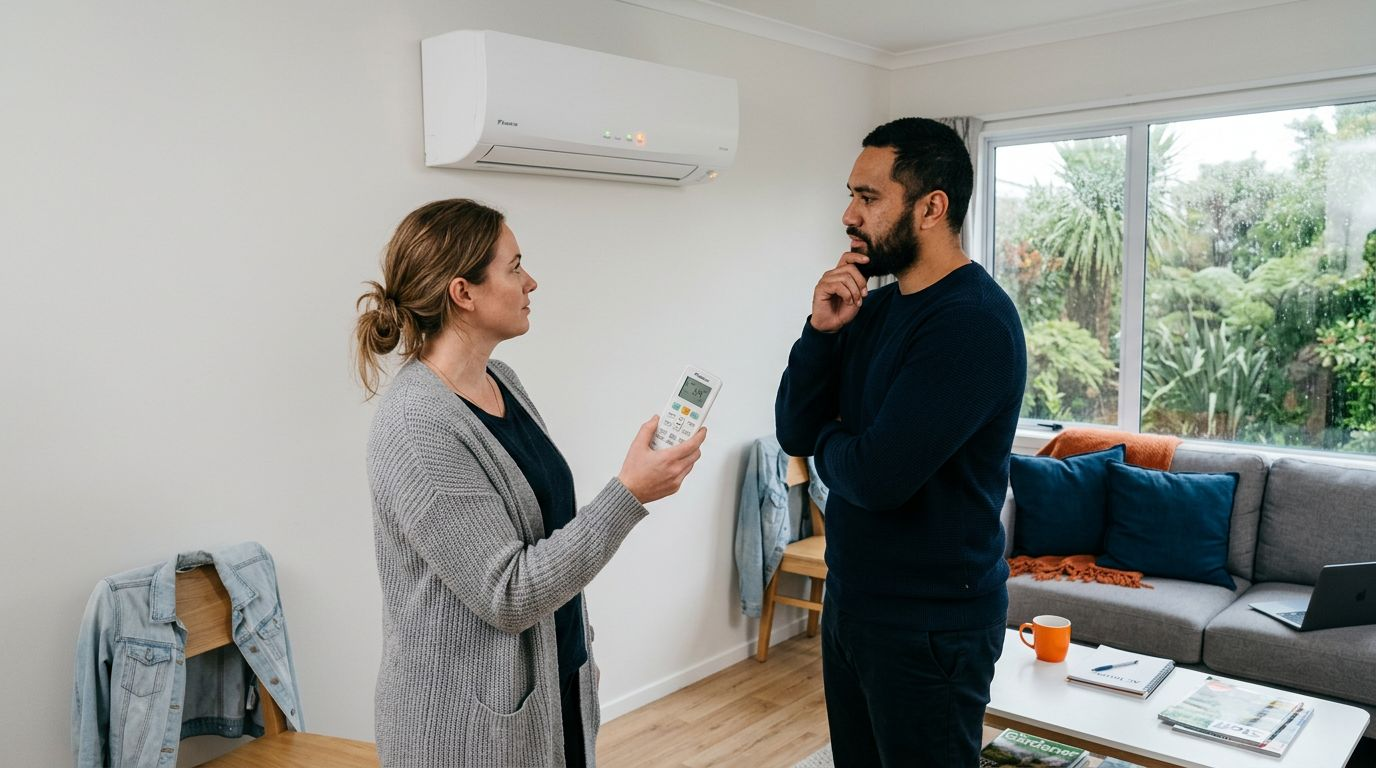
The most common cause of a heat pump blowing cold air is the wrong mode setting. Ensure your remote shows the "Sun" icon, which represents Heat mode. Avoid using the "Auto" mode (often a refresh symbol or an 'A'), as this can cause the unit to switch between heating and cooling to maintain a specific temperature, often resulting in a blast of cold air when you least want it.

Check your fan settings as well. If the fan is set to "On" or a high manual speed, it will continue to blow air even when the outdoor compressor has paused its heating cycle. This results in room-temperature air moving around, which feels like a cold draft. Setting your fan to "Auto" allows the unit to slow down or stop the air movement when it is not actively heating.

Step 2: Use Realistic Temperature Settings

Auckland winters are typically mild but damp. For the best efficiency, we recommend a set point between 18°C and 22°C. Cranking the temperature to 26°C or higher forces the unit to work harder without heating the room any faster. In fact, running a unit at 26°C uses about 50% more power than a setting of 21°C.

If you are looking for more ways to keep your system running efficiently, our guide on common heat pump problems and fixes offers deeper insights into optimising your settings for the local climate.

Step 3: Clean Your Indoor Filters

Dirty filters are the primary cause of poor performance. When dust and pet hair clog the mesh, the unit struggles to pull in enough air to heat. This makes the airflow feel weak and cool. According to our service records, dust and dirt buildup can increase power consumption by 10% to 35% because the system has to run longer to achieve the same result.

We recommend cleaning your filters monthly during winter. Simply turn off the unit, pop open the front panel, slide the filters out, and give them a vacuum or a rinse under a lukewarm tap. Ensure they are completely dry before sliding them back in. Regular maintenance ensures your system remains one of the most efficient heating solutions available in New Zealand.

Step 4: Understand the Defrost Cycle

On cold, frosty mornings, your outdoor unit may develop a layer of ice on its coils. To clear this, the heat pump enters a "Defrost Cycle." During this time, the unit temporarily reverses its operation to warm up the outdoor coils. Indoors, the fan will either stop or blow very slowly, and the air may feel cool for a short period.

A normal defrost cycle lasts about 10 to 15 minutes. You might see steam rising from the outdoor unit or hear a "whooshing" sound. This is perfectly normal. However, if the unit stays in this mode for hours or is completely encased in a thick block of ice, you likely have a technical fault that requires professional attention.

Step 5: Inspect the Outdoor Unit

Airflow is just as important outside as it is inside. Check that your outdoor unit is clear of garden debris, fallen leaves, or stored items. We suggest maintaining at least 50 cm of clear space around the unit. If you find ice on the coils, never attempt to chip it away with a tool or pour boiling water on it, as this can cause permanent damage to the delicate fins and pipes.

For those managing properties or living in particularly leafy suburbs like Titirangi, checking the outdoor unit should be a regular part of your home maintenance routine. You can read more about long-term care in our heat pump health check guide.

When to Call Auckland Heatpump Services

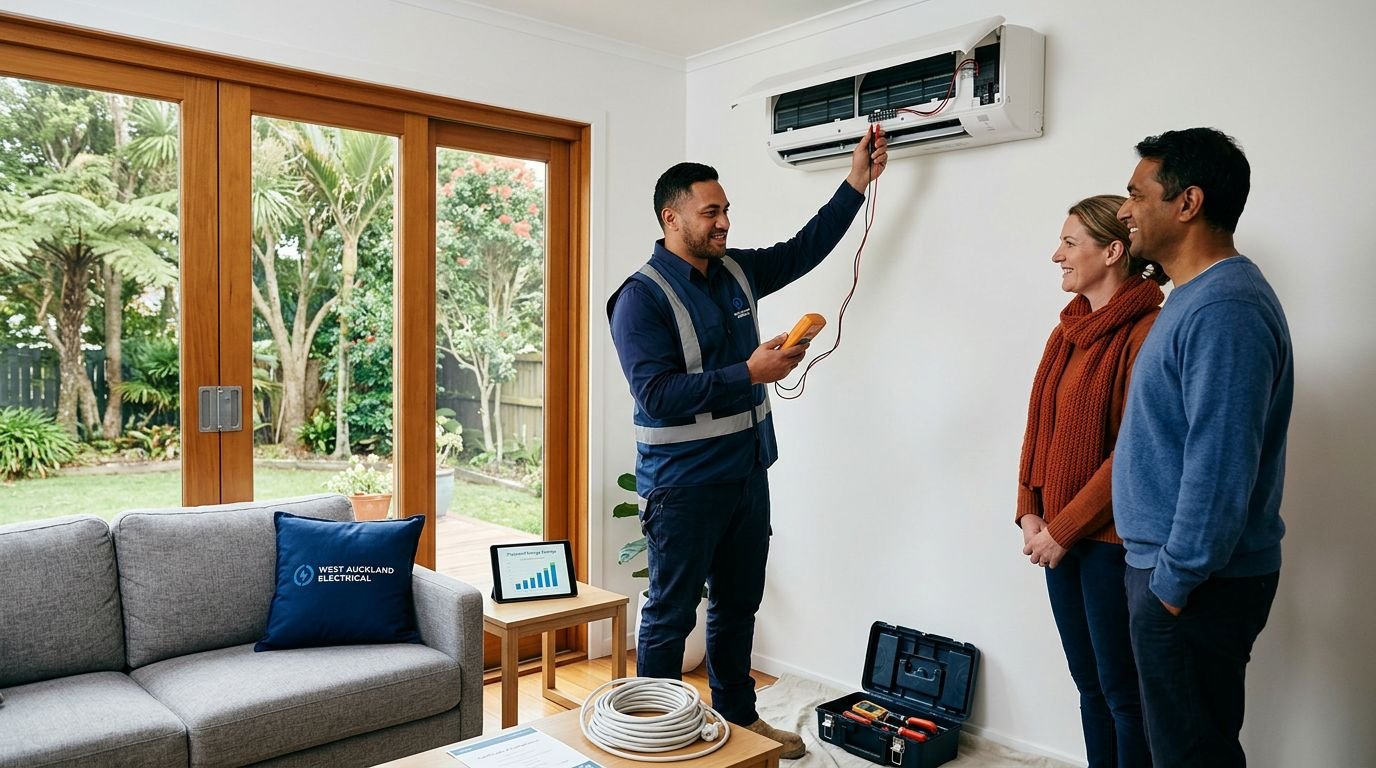
If you have checked the settings, cleaned the filters, and waited out a defrost cycle but the air is still cold, it is time to call in the experts. Certain issues require a registered electrician or a qualified technician to handle safely. We recommend booking a professional service if you encounter any of the following red flags:

  • The unit displays blinking lights or specific error codes on the indoor fascia.
  • You notice water leaking from the indoor unit or unusual puddles under the outdoor unit.
  • The system makes loud grinding, squealing, or rattling noises.
  • There is a persistent smell of burning or "electrical" odours.
  • The outdoor unit remains heavily iced up even when the sun is out.

These symptoms often point to deeper issues like refrigerant leaks, a faulty reversing valve, or electrical sensor failures. A professional 20-point service from our team costs $130 + GST for a single unit and can save you up to $250 per year on energy bills by restoring the unit to its peak efficiency. We have performed over 6,000 installations across Auckland, so we know exactly how to get your system back to its best.

Maintaining your heat pump ensures your home stays dry and warm throughout the winter months. If your DIY troubleshooting hasn't solved the problem, reach out to us today to get your heating back on track.

Recent Posts

By The Auckland Heat Pump Services Team February 25, 2026
Discover why Fujitsu heat pumps are a top choice for Auckland homes. Learn about energy efficiency, ZERL ratings, costs, and the benefits of professional installation.
By The Auckland Heat Pump Services Team February 24, 2026
Keep your Auckland home comfortable and your power bills low with our comprehensive heat pump maintenance checklist. Learn what to do yourself and when to call the pros.
By The Auckland Heat Pump Services Team February 20, 2026
Learn which heat pump maintenance tasks you can handle yourself in Auckland and why professional servicing is essential for efficiency and warranty protection.
By The Auckland Heat Pump Services Team February 15, 2026
Learn how seasonal considerations for heat pump use can save you up to $250 a year. Expert advice for Auckland homeowners on preparing for winter and summer.
By The Auckland Heat Pump Services Team February 13, 2026
Discover how modern heat pumps reduce emissions in Auckland. Learn about NZ's renewable grid, R32 refrigerants, and why moving heat is better for the planet.
By The Auckland Heat Pump Services Team January 31, 2026
Discover the actual running costs of heat pumps in Auckland. Learn how to calculate hourly costs, read energy labels, and save on power bills with expert tips.
By The Auckland Heat Pump Services Team January 28, 2026
Discover how to choose the best small heat pump for your Auckland apartment or unit. Learn about right-sizing, quiet operation, and efficient compact models.
By The Auckland Heat Pump Services Team January 23, 2026
Is your heat pump leaking water inside? Discover the 4 most common causes, from blocked drains to frozen coils, and learn when to call an Auckland expert.
By The Auckland Heat Pump Services Team January 21, 2026
Is your heat pump making strange sounds? Learn to identify grinding, hissing, and rattling noises to prevent costly repairs in your Auckland home.
By The Auckland Heat Pump Services Team January 16, 2026
Is your Auckland aircon ready for summer? Learn the 5 warning signs your heat pump needs a professional service to avoid breakdowns and high power bills.
Show More