
Eco-Friendly Heat Pumps in NZ: Slash Emissions & Save! (Auckland's Renewable Advantage)

The Auckland Heat Pump Services Team • February 13, 2026

Share this article

The Eco-Friendly Choice: The Real Environmental Impact of Modern Heat Pumps

Key Takeaways

  • Heat pumps move existing heat rather than creating it, resulting in 300% to 500% efficiency.
  • New Zealand's 80% to 85% renewable electricity grid makes heat pumps a leading low-carbon heating solution.
  • Switching from gas to a heat pump can reduce operational CO2 emissions by up to 90%.
  • Modern R32 refrigerants offer a 68% lower global warming potential than older alternatives.
  • Professional installation ensures systems remain sealed and efficient for their entire lifespan.

Many Aucklanders look for practical ways to reduce their carbon footprint while keeping their homes dry and healthy. Choosing a modern heat pump is one of the most effective ways to achieve both goals simultaneously. As a family-run business with over 15 years of experience in Auckland, we see how these systems transform home comfort and energy profiles every day.

The environmental benefit of a heat pump stems from its fundamental design. While traditional heaters struggle to be efficient, heat pumps use a clever process to provide more warmth for less energy. We believe that understanding this science helps homeowners make informed decisions for their families and the planet.

The Science of Moving Heat

Traditional electric heaters and gas burners create heat by burning fuel or using an electric element. This process is limited by physics: you can never get more energy out than you put in. A standard electric heater has a Coefficient of Performance (COP) of 1.0, meaning one unit of electricity creates exactly one unit of heat.

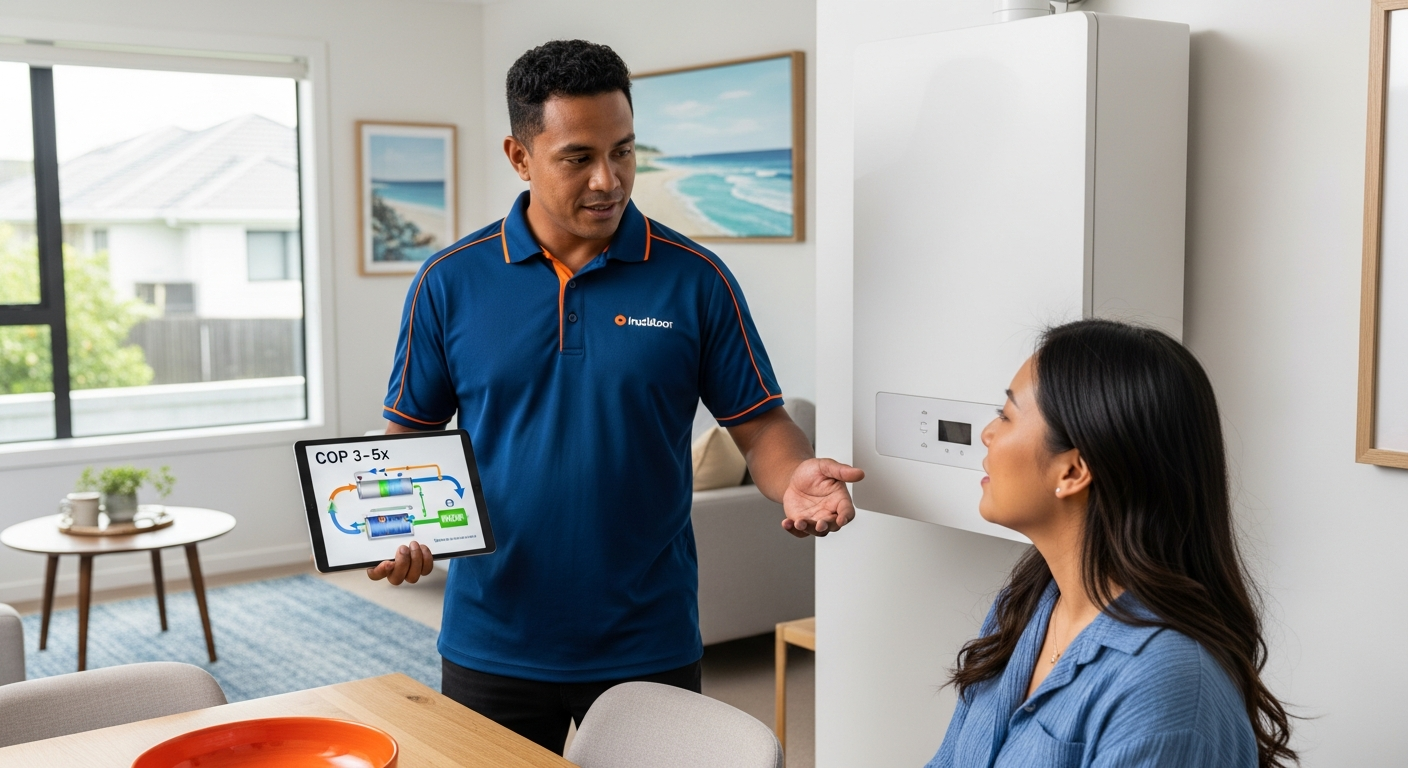
Heat pumps operate differently by functioning as heat movers. They use a small amount of electricity to circulate refrigerant, which absorbs heat from the outside air and releases it indoors. Even on a crisp Auckland morning, there is enough ambient heat in the air for this process to work effectively. This allows modern units to achieve a COP of 3.0 to 5.0, providing three to five units of heat for every unit of electricity consumed. You can find a detailed breakdown of this refrigeration cycle in our guide to the science behind year-round comfort.

According to EECA , this high efficiency makes heat pumps the most sustainable mainstream heating option available to New Zealanders. By moving heat instead of making it, we significantly reduce the total energy required to keep our homes at a healthy temperature.

Why Efficiency Equals Lower Emissions in New Zealand

The environmental impact of any electrical appliance depends heavily on how the electricity is generated. New Zealand is in a unique position because our national grid is approximately 80% to 85% renewable. Most of our power comes from wind, hydro, and geothermal sources, which carry a very low carbon cost.

When you combine a highly efficient heat pump with a clean power grid, the results are impressive. Research from Agrilink NZ shows that New Zealand grid electricity has life-cycle greenhouse gas emissions of about 0.11 kg CO2e per kWh. This is significantly lower than many other countries, meaning every kilowatt-hour saved by an efficient heat pump has a direct, positive impact on our national emissions profile.

As the New Zealand grid continues to incorporate more renewable energy over the next decade, a heat pump installed today will effectively become "cleaner" over its lifespan. This makes it a future-proof investment for those looking to decarbonise their lifestyle.

Heat Pumps vs Gas Heating: The Emissions Gap

Fossil fuel heating, such as piped natural gas or bottled LPG, relies on combustion. This process releases carbon dioxide directly into the atmosphere at the point of use. Even the most efficient gas boilers produce significantly more emissions than an electric heat pump operating on our renewable grid.

Data from International Energy Agency (IEA) comparisons shows that heat pumps typically emit only 40% to 60% of the CO2 produced by best-in-class gas boilers. In New Zealand, the difference is even more stark. EECA estimates that heat pumps have around ten times lower emissions than gas or LPG heating when used in our local context.

Switching from gas to electric heating also provides financial relief. Take a family in a three-person household in Auckland, for example. Moving from bottled LPG to a heat pump can save hundreds of dollars in annual running costs. We provide a full comparison of these figures in our article on Auckland heat pump running costs.

Modern Refrigerants and R32 Technology

Refrigerants are the fluids used inside a heat pump to carry heat. Older systems used gases like R22, which contributed to ozone depletion and had a high Global Warming Potential (GWP). Modern engineering has replaced these with much safer alternatives.

Most high-efficiency systems we install today use R32 refrigerant. This gas has zero ozone depletion potential and a GWP of 675, which is roughly 68% lower than the R410A refrigerant commonly used in the previous generation of hardware. R32 is also more efficient at transferring heat, allowing manufacturers to use smaller refrigerant charges to achieve the same heating output. Technical comparisons from industry experts indicate that R32-based systems are typically 10% to 15% more energy-efficient than their predecessors.

Ensuring these gases stay contained within the system is a core part of our job. Our registered electricians and installers follow strict protocols to prevent leakage, ensuring the environmental impact remains as low as possible throughout the unit's 15-year life. You can read more about the evolution of refrigerants to see how far the industry has come.

Maximising Your Environmental Benefit

The total environmental benefit of your heat pump depends on how you choose and use the system. Selecting a unit with a high Energy Star rating ensures that you are using the least amount of electricity possible to achieve your desired temperature. Whether you are a landlord in Ponsonby looking to meet Healthy Homes standards or a homeowner in Papakura wanting to lower bills, efficiency ratings are your best guide.

Correct sizing is equally important. A system that is too small will work overtime and lose efficiency, while a system that is too large will cycle on and off frequently, wasting energy. We recommend consulting our guide to Energy Star ratings to understand how these labels apply to the Auckland climate.

Regular maintenance also plays a role in sustainability. Keeping filters clean and ensuring the outdoor unit is free of debris allows the system to maintain its high COP. A well-maintained heat pump remains an asset to both your home and the environment for many years.

Choosing a heat pump is a powerful way to support New Zealand's transition to a low-carbon future. By leveraging our renewable grid and modern R32 technology, you can enjoy a warm, dry home while knowing you have made the most responsible choice for the environment.

Recent Posts

By The Auckland Heat Pump Services Team February 25, 2026
Discover why Fujitsu heat pumps are a top choice for Auckland homes. Learn about energy efficiency, ZERL ratings, costs, and the benefits of professional installation.
By The Auckland Heat Pump Services Team February 24, 2026
Keep your Auckland home comfortable and your power bills low with our comprehensive heat pump maintenance checklist. Learn what to do yourself and when to call the pros.
By The Auckland Heat Pump Services Team February 20, 2026
Learn which heat pump maintenance tasks you can handle yourself in Auckland and why professional servicing is essential for efficiency and warranty protection.
By The Auckland Heat Pump Services Team February 15, 2026
Learn how seasonal considerations for heat pump use can save you up to $250 a year. Expert advice for Auckland homeowners on preparing for winter and summer.
By The Auckland Heat Pump Services Team January 31, 2026
Discover the actual running costs of heat pumps in Auckland. Learn how to calculate hourly costs, read energy labels, and save on power bills with expert tips.
By The Auckland Heat Pump Services Team January 28, 2026
Discover how to choose the best small heat pump for your Auckland apartment or unit. Learn about right-sizing, quiet operation, and efficient compact models.
By The Auckland Heat Pump Services Team January 23, 2026
Is your heat pump leaking water inside? Discover the 4 most common causes, from blocked drains to frozen coils, and learn when to call an Auckland expert.
By The Auckland Heat Pump Services Team January 21, 2026
Is your heat pump making strange sounds? Learn to identify grinding, hissing, and rattling noises to prevent costly repairs in your Auckland home.
By The Auckland Heat Pump Services Team January 16, 2026
Is your Auckland aircon ready for summer? Learn the 5 warning signs your heat pump needs a professional service to avoid breakdowns and high power bills.
By The Auckland Heat Pump Services Team January 14, 2026
Learn how to decode your Auckland heat pump quote. We break down unit costs, labour, electrical compliance, and hidden fees to help you compare quotes accurately.
Show More