


Auckland Heat Pump Running Costs: Slash Your Power Bill & Stay Warm!
How Much Power Does a Heat Pump Use? Understanding Your Running Costs
Key Takeaways
- Heat pumps provide approximately three times more heat than the electricity they consume, making them the most efficient heating option in New Zealand.
- A typical 6kW heat pump costs between 40 and 60 cents per hour to run under normal conditions.
- Switching from piped gas to a heat pump can save an average Auckland household around $122 per year.
- Regular professional servicing reduces power consumption by 10 percent to 35 percent by maintaining component cleanliness.
We often hear the same question from Auckland homeowners: will a heat pump send my power bill through the roof? The short answer is that while heat pumps use electricity, they represent the most cost-effective way to keep your home comfortable. Unlike traditional heaters that create heat from nothing, a heat pump moves existing heat from the outside air into your home. This process requires significantly less energy than generating warmth from a glowing element or a gas flame.
In New Zealand, the average heat pump provides about three times more heat than the power it consumes. For every one unit of electricity you pay for, you receive three or more units of warmth. This efficiency makes heat pumps a staple for Auckland families looking to balance comfort with the monthly budget.
Understanding the Terms: kW vs kWh
Understanding your power bill requires a quick look at two common terms. Kilowatts (kW) refer to the capacity or size of the unit. For example, a 6kW heat pump has the capacity to deliver 6kW of heat. Kilowatt-hours (kWh) represent the energy used over time. This is the figure your power provider uses to calculate your bill. If you run a 1kW appliance for one hour, you have used 1kWh of energy.
The efficiency of this conversion is known as the Coefficient of Performance (COP). A heat pump with a COP of 3.0 delivers 3kW of heat for every 1kW of electricity it draws from the wall. Most modern units in New Zealand offer a COP between 3.0 and 5.0, placing them far ahead of standard plug-in heaters.
How to Read the Zoned Energy Rating Label (ZERL)
Every new heat pump comes with a Zoned Energy Rating Label. This label provides a star rating for both heating (red) and cooling (blue). Because New Zealand has varied climates, the label shows estimated annual energy use for three different zones. For those of us in Auckland, the "average" climate zone figure provides the most accurate estimate for annual heating kWh.
You can estimate your annual running costs by multiplying the kWh figure on the label by your current power rate. If the label suggests 1,000kWh for heating and your power costs 30 cents per kWh, your estimated annual heating cost is $300. Higher star ratings indicate a more efficient unit that will cost less to run over its typical 15-year lifespan.
The 6kW Example: Calculating Hourly Costs
To see how this works in a real-world Auckland setting, let's look at a common 6kW unit. If we assume a COP of 3.5 and a power tariff of 30 cents per kWh, we can find the hourly cost with a simple calculation. First, we divide the heating capacity (6kW) by the COP (3.5) to find the electrical input, which is approximately 1.7kW. Multiplying that 1.7kW by the 30-cent power rate gives us a running cost of roughly 51 cents per hour.
Research from Positive Electrical suggests that most New Zealand households pay between 25 and 35 cents per kWh. Based on these rates, a modern heat pump typically costs between $1.50 and $3.00 per day for moderate evening use. This is significantly lower than the cost of running multiple plug-in heaters to achieve the same temperature.
Choosing the right size for your space is essential to maintaining these low costs. An undersized unit will run at maximum power constantly, while an oversized unit may cycle on and off too frequently. You can use our online tool to find the correct capacity for your room.
How Heat Pumps Compare to Other Heaters
Heat pumps consistently outperform other heating methods in terms of running costs. Traditional electric plug-in heaters, such as oil columns or fan heaters, have a 1-to-1 efficiency ratio. This means 1kW of electricity produces exactly 1kW of heat. Consequently, you pay three to four times more for the same amount of warmth compared to a heat pump.
The savings remain significant when compared to gas. EECA estimates show that heat pumps cost about one-third of the price of gas heating for the same heat output. Switching from bottled LPG to a heat pump can save a household over $350 per year, even before considering the daily fixed connection charges associated with gas lines.
What Drives Your Power Consumption?
Several practical factors influence how much electricity your unit draws. The thermostat setting is the most significant lever you can pull. Every degree you increase the temperature adds roughly 5 percent to 10 percent to your energy use. Setting your heat pump to 18°C or 20°C provides a healthy, comfortable environment without unnecessary expense.
The condition of your home also plays a role. A well-insulated house in Ponsonby will retain heat much longer than a draughty villa, allowing the heat pump to power down once the target temperature is reached. Closing curtains at dusk and sealing gaps around doors helps the system work more efficiently.
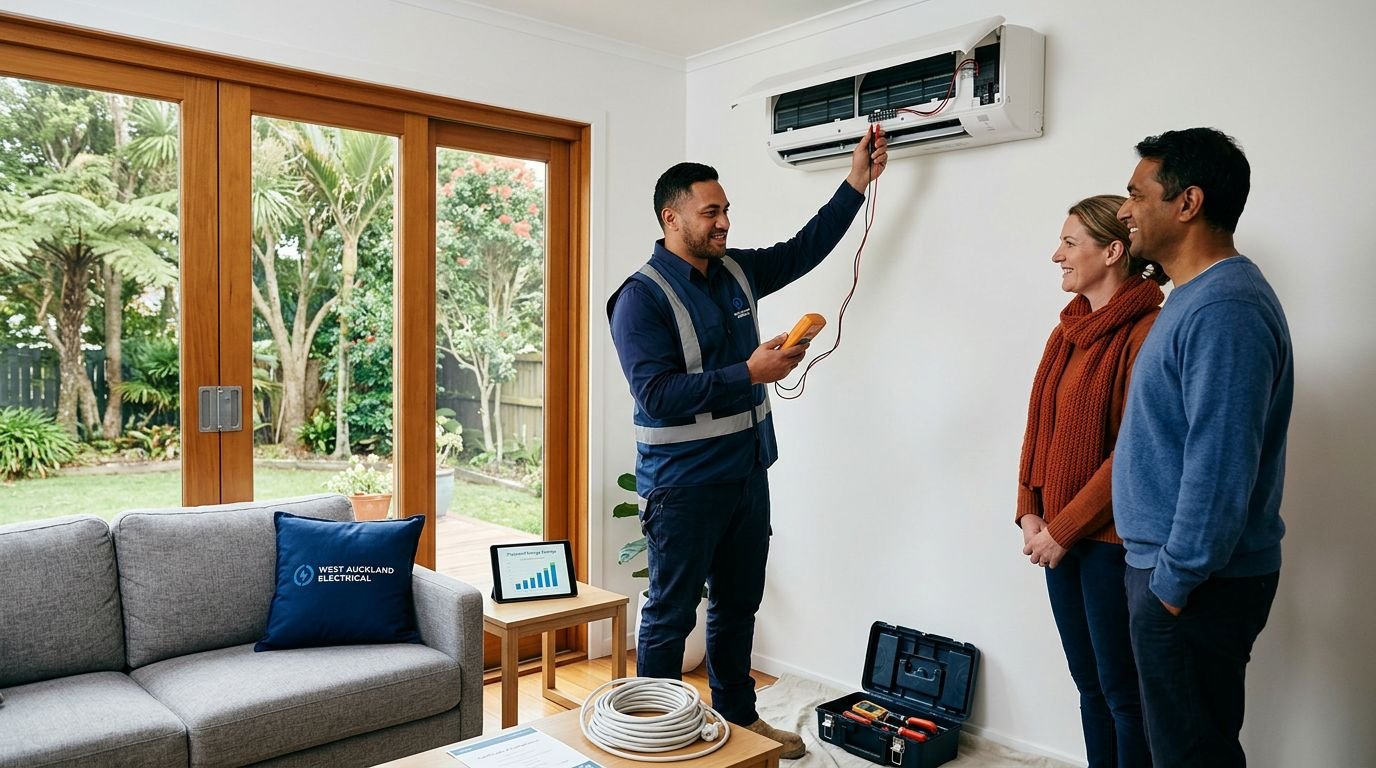
Maintenance is the most overlooked factor in energy efficiency. Dust and debris on filters or outdoor coils force the motor to work harder, increasing power consumption by up to 35 percent. Regular cleaning ensures the system breathes easily and operates at its peak efficiency. We recommend a professional service once a year to keep these costs at a minimum.
Practical Tips for Auckland Homeowners
Maximising your savings requires a combination of the right technology and smart habits. We recommend using timers or Wi-Fi controls to pre-heat your living area shortly before you arrive home. This avoids the need to leave the unit running all day while the house is empty. If you plan to be away for more than two hours, turning the unit off is generally the most efficient choice.
In the humid Auckland summer, the "Dry" or "Dehumidify" mode offers a great way to stay comfortable. This mode removes moisture from the air at a lower cost than full cooling. When only a light breeze is needed, the fan-only mode costs as little as 5 cents per hour, providing relief on those sticky February nights without impacting your bill.
Your Partner in Energy Efficiency
At Auckland Heatpump Services, we focus on long-term comfort and genuine savings. Our team of registered electricians ensures that every installation is both safe and optimised for efficiency. We provide a free measure and quote to ensure your system is sized perfectly for your specific Auckland home, preventing the high running costs associated with poorly matched units.
Whether you are a landlord looking to meet Healthy Homes standards or a homeowner wanting to reduce winter power bills, we offer transparent pricing and expert advice. From the initial installation to annual servicing, we help you get the most out of your investment.