


Heat Pump Quote Decoder: Uncover Hidden Costs & Get the Best Deal in Auckland!
How to Read a Heat Pump Quote: A Line-by-Line Breakdown
Key Takeaways
- Auckland heat pump installations typically range from $1,700 for single units to over $15,000 for full ducted systems.
- Every quote must include a Certificate of Compliance (CoC) issued by a registered electrician to be legally valid and insurance-compliant.
- Standard installations usually cover back-to-back setups, while non-standard work accounts for long pipe runs or complex electrical upgrades.
- Transparent quotes itemise materials, labour, and specific unit models rather than providing a single lump-sum figure.
Opening a heat pump quote can feel like reading a different language. You might see a list of model numbers, technical abbreviations, and varying price points that make it difficult to know if you are getting a fair deal. We believe that clarity is the foundation of a good installation. Whether you are a homeowner in Remuera or a property manager in Manukau, understanding exactly what you are paying for ensures your home stays warm and your investment stays protected.
A professional quote serves as a roadmap for the project. It outlines the hardware, the expertise required to install it, and the legal certifications that keep your insurance valid. If you want to see how these costs translate to specific services, you can view our current heat pump pricing for a clearer picture of the Auckland market.
Why Heat Pump Quotes Vary Across Auckland
Price variations usually reflect the specific requirements of your property rather than arbitrary markups. A standard single-split heat pump installation in Auckland typically costs between $1,700 and $4,000, according to our 2025 cost guide. This range depends heavily on the unit size, the brand selected, and the complexity of the site.
Larger projects naturally command higher figures. Multi-split systems serving several rooms generally start from around $5,000. For those seeking whole-home comfort, fully ducted residential systems commonly range from $8,000 to over $15,000. These figures include the specialised design and extensive ducting work required to balance airflow throughout a larger floor plan.
Standard vs Non-Standard Installations
The term "standard installation" refers to a back-to-back setup. This involves an indoor unit mounted on an external wall with the outdoor compressor sitting directly on the ground or a bracket on the opposite side of that same wall. This setup uses minimal piping and straightforward electrical connections.
Non-standard work applies when the indoor and outdoor units are far apart. Take a townhouse in Albany, for example. If the indoor unit is on the second floor and the outdoor unit must sit on the ground at the rear of the property, the quote will include extra costs for long pipe runs, condensate pumps, or specialised scaffolding. A transparent quote clearly separates these additional requirements from the base installation fee.
Line Item 1: The Heat Pump Unit (Equipment Cost)
The hardware is often the largest single cost on your quote. This line item should specify the brand, model number, and capacity in kilowatts (kW). Selecting a reputable brand with a high energy star rating often leads to lower running costs and quieter operation over the life of the system.
The Energy Efficiency and Conservation Authority (EECA) emphasises that correct sizing and quality hardware are fundamental to a system's performance. You can read more about their good practice guide for residential installations. Choosing a unit that is too small for your space forces the motor to work harder, which shortens its lifespan and increases your power bill.
Line Item 2: Installation Labour
Professional labour covers the technical skill required to commission a high-pressure refrigeration system. This includes mounting the units, core-drilling through exterior walls, vacuuming the refrigerant lines to remove moisture, and pressure-testing the system for leaks. Local data from Exotic Electrical suggests that labour components scale with the complexity of the job, particularly for medium to large living areas where multi-room systems are involved.
Line Item 3: Materials and Accessories
A detailed quote itemises the materials used to connect and protect your system. This includes insulated copper refrigerant piping, condensate drainage hoses, and UV-resistant trunking that hides the pipes on your exterior walls. It also covers the mounting hardware, such as rubber feet for ground units or heavy-duty wall brackets. Itemising these materials prevents "hidden" costs from appearing on the final invoice when the installer realises they need more piping than originally estimated.
Line Item 4: Electrical Work and Compliance
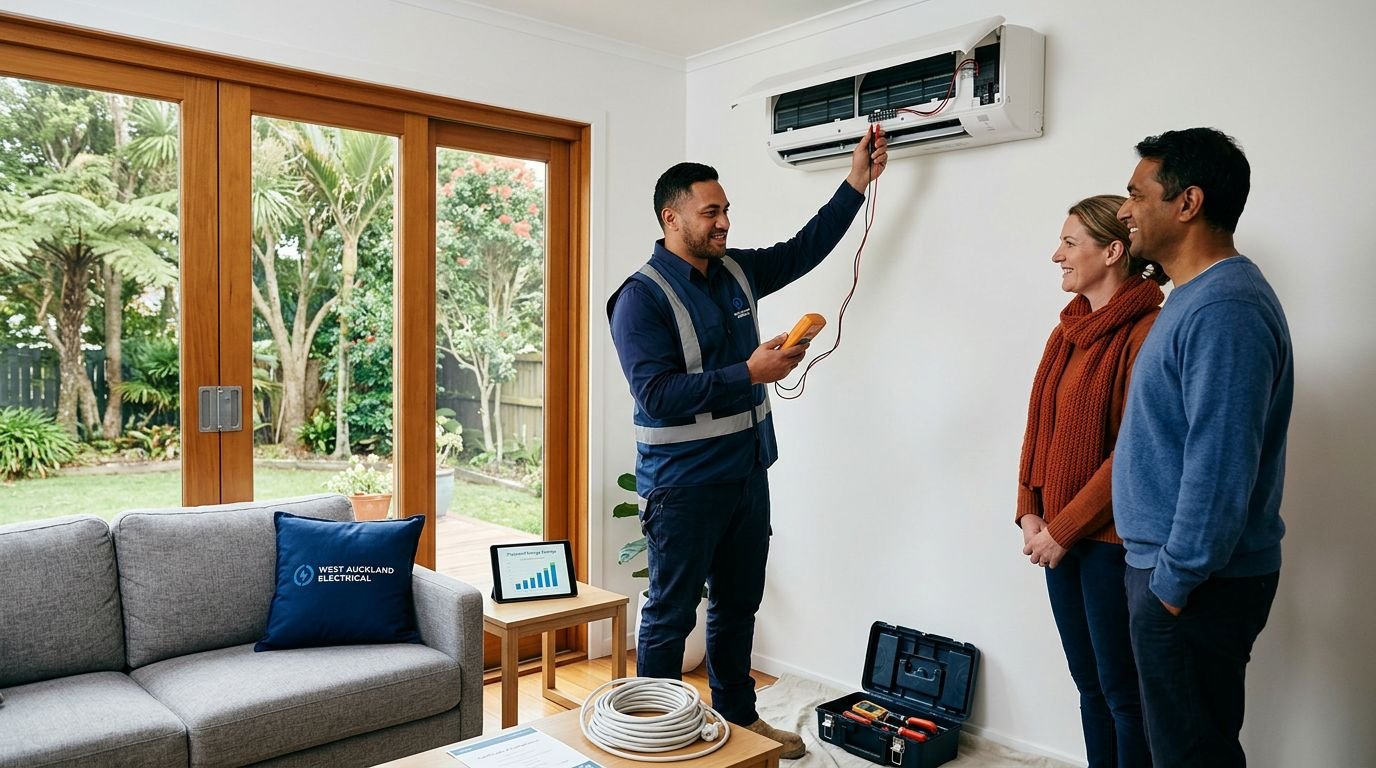
Connecting a heat pump to your home's mains power is "prescribed electrical work" under New Zealand law. This must be performed by an EWRB-registered electrician. Your quote should explicitly state that a Certificate of Compliance (CoC) is included in the price. This document confirms the work meets AS/NZS 3000 safety standards and is essential for your home insurance and future property sales.
According to ElectricianQuotes , the CoC must be issued within five working days of the work being completed. Homeowners who allow unregistered individuals to perform this work face fines of up to $10,000. We recommend checking our guide on questions to ask your installer to ensure they are fully licensed and insured.
WorkSafe New Zealand also confirms that electricians must issue a CoC for any fixed wiring work to prove the installation is electrically safe. You can find more details on their official guidance page. If a quote does not mention electrical certification, you should ask for it to be added in writing before accepting.
Line Item 5: Warranties and Aftercare
A comprehensive quote distinguishes between two types of protection. The manufacturer’s warranty covers the unit itself, while the installer’s workmanship warranty covers the quality of the installation. A well-installed and regularly maintained heat pump can reliably last 15 to 20 years. Your quote should also outline a recommended servicing schedule to keep these warranties valid and the system running efficiently.
Understanding the Fine Print
The terms and conditions section contains vital information about how the project will be managed. Look for details on payment terms, such as the required deposit and when the final balance is due. It should also explain how variations are handled. If an installer discovers an issue with your existing switchboard that requires an upgrade, the terms should outline how that additional cost is communicated and approved.
Guidance from Zynoff suggests that a fixed-price quote is always preferable to a rough estimate. A fixed quote provides price certainty for a defined scope of work, whereas an estimate is merely an educated guess that can change as the job progresses.
How to Compare Quotes Like a Pro
When you have two or three quotes on the table, compare them by looking at the specific unit models first. Ensure they have the same kW capacity and energy ratings. Check that the labour scope is identical: does one quote include rubbish removal while the other leaves the old unit on your lawn? Finally, verify that both quotes include the mandatory Certificate of Compliance and a clear workmanship warranty.
Red flags include vague, single-line quotes that lack detail or prices that seem significantly lower than the market average. Low prices often indicate that the installer is skipping the legal requirement for a registered electrician or using inferior materials. For more information on the regulations governing these installations, you can visit DC Installation Services.
At Auckland Heatpump Services, we provide fixed-price quotes that itemise every component of the job. Our team of registered electricians handles the entire process from the initial measure-and-quote to the final electrical certification. We believe in "straight up" honesty and transparent pricing, ensuring you know exactly what is required to keep your Auckland home comfortable for years to come.